Whitworth journalism professor chosen as finalist for prestigious research award
July 29, 2009

Jim McPherson, associate professor of communication studies at Whitworth, was recently selected as one of six finalists for the esteemed 2008 Frank Luther Mott/Kappa Tau Alpha Research Award for his book, The Conservative Resurgence and the Press: The Media's Role in the Rise of the Right (Northwestern University Press, 2008). Named in honor of the Pulitzer Prize-winning Mott, the annual award is given for the best book on journalism and mass communication based on original research published that year.

Kappa Tau Alpha, the national college honor society, founded in 1910, for scholarship in journalism and mass communication, has recognized research contributions to the field since the inauguration of the award in 1944. The winning author receives a $1,000 prize. Entries are judged by a panel of university professors of journalism and mass communication and national officers of Kappa Tau Alpha.
"Kappa Tau Alpha has been giving the Mott award for 65 years, and it has a great reputation, so that makes the recognition even more gratifying," McPherson says. "Of course, at Whitworth our primary concern is teaching, but I was able to incorporate much of what I learned in writing the book into my classes. I'm pleased that the judges found it to be meaningful research."
In his book, McPherson asserts that while conservative talk radio and Fox News were credited with Republican political gains over the past 30 years, direct mail and strong, nationwide political organization did more to contribute to the Republican resurgence that began with Ronald Reagan in 1980 and continued in 1994 with Republicans taking control of Congress for the first time in 40 years. McPherson also recognizes the parallels between Reagan's and President Barack Obama's rise to popularity through stirring convention speeches and compelling campaign rhetoric.
McPherson began writing the book while working on the seventh and final volume in a history of journalism in America: Journalism at the End of the American Century, 1965 to the Present (Praeger Publishers, 2006). His research identified several trends that call into question media's inclination and ability to continue playing the traditional roles of government watchdog and reformer. A former journalist and editor, McPherson argues in his book that mainstream media have failed to cover the resurgence of conservatism adequately and, in many ways, have also become more conservative. He calls on the press to focus greater attention and resources on its role in helping Americans govern themselves.
The winner of the 2008 Mott Award was Kathy Roberts Forde, author of Literary Journalism on Trial: Masson v. 'New Yorker' and the First Amendment. Steven Casey took second place for Selling the Korean War: Propaganda, Politics and Public Opinion 1950-1953. Other finalists were Janice Peck for The Age of Oprah: Cultural Icon for the Neoliberal Era; Loren Ghiglione for CBS's Don Hollenbeck: An Honest Reporter in the Age of McCarthyism; and Jan Whitt for Women in American Journalism: A New History.
McPherson teaches mass-media history, media criticism and journalism skills at Whitworth. He holds an interdisciplinary Ph.D. in journalism, history and political science from Washington State University and has written on a variety of topics, focusing primarily on American journalism since 1960.
Located in Spokane, Wash., Whitworth is a private liberal arts university affiliated with the Presbyterian Church (USA). The university enrolls 2,600 students in more than 50 undergraduate and graduate programs.
Contacts:
Jim McPherson, associate professor of communication studies, Whitworth University, (509) 777-4429 or jmcpherson@whitworth.edu.
Emily Proffitt, public information officer, Whitworth University, (509) 777-4703 or eproffitt@whitworth.edu.
Whitworth professor's new book explores the heart of Karl Barth's theology
July 28, 2009
Adam Neder examines Barth's concept of "participation in Christ"
As a pastor, university professor, and the primary author of the Barmen Declaration, which resisted Nazism in the German Church, Karl Barth was a towering figure in 20th-century theology and church life. He was even once described by Pope Pius XII as the most important theologian since Thomas Aquinas (1225-74).
In his new book, Participation in Christ: An Entry into Karl Barth's 'Church Dogmatics' (Westminster John Knox Press, 2009), Whitworth Associate Professor of Theology Adam Neder offers a fresh perspective on a central theme in Barth's theology. By focusing on the role that participation in Christ played throughout Barth's 13-volume magnum opus, Neder shows that the concept was at the very core of Barth's theology, rather than a peripheral aspect of his thought, as some have believed.
"In more than 9,000 pages, Barth attempted to re-think the whole of Christian doctrine and ethics from a starting point in the person of Jesus Christ," Neder says. "The result is an unusually rewarding work of theology that is also notoriously difficult to understand. Until one develops a feel for the style and content of Barth's prose, reading the Church Dogmatics can be as disorienting as it is exhilarating."
Neder continues, "As I was trying to find a foothold in Barth's argument, I began to notice how often the theme of participation in Christ appears in Church Dogmatics. Eventually I realized that it is part of the fundamental core of Barth's theology, is present in virtually every part of the Church Dogmatics, and that understanding it is essential for understanding the work as a whole. That insight was the key that unlocked the Church Dogmatics for me."
Neder's work has been well received by a number of Barth scholars.
Richard Burnett, professor of systematic theology at Erskine Theological Seminary and author of Karl Barth's Theological Exegesis, says, "Given the enormous importance of the concept of participation in Barth's theology, Neder's work is most welcome. This is a clear, cogent, informative and edifying tour through the Church Dogmatics with no unnecessary detours. Well worth the trip."
Kimlyn Bender, author of Karl Barth's Christological Ecclesiology, highlights the significance of Neder's claim that Barth's doctrine of participation in Christ constitutes a major contribution to the church's understanding of salvation as participation in the being of God.
In his new book, Participation in Christ: An Entry into Karl Barth's 'Church Dogmatics' (Westminster John Knox Press, 2009), Whitworth Associate Professor of Theology Adam Neder offers a fresh perspective on a central theme in Barth's theology. By focusing on the role that participation in Christ played throughout Barth's 13-volume magnum opus, Neder shows that the concept was at the very core of Barth's theology, rather than a peripheral aspect of his thought, as some have believed.
"In more than 9,000 pages, Barth attempted to re-think the whole of Christian doctrine and ethics from a starting point in the person of Jesus Christ," Neder says. "The result is an unusually rewarding work of theology that is also notoriously difficult to understand. Until one develops a feel for the style and content of Barth's prose, reading the Church Dogmatics can be as disorienting as it is exhilarating."
Neder continues, "As I was trying to find a foothold in Barth's argument, I began to notice how often the theme of participation in Christ appears in Church Dogmatics. Eventually I realized that it is part of the fundamental core of Barth's theology, is present in virtually every part of the Church Dogmatics, and that understanding it is essential for understanding the work as a whole. That insight was the key that unlocked the Church Dogmatics for me."
Neder's work has been well received by a number of Barth scholars.
Richard Burnett, professor of systematic theology at Erskine Theological Seminary and author of Karl Barth's Theological Exegesis, says, "Given the enormous importance of the concept of participation in Barth's theology, Neder's work is most welcome. This is a clear, cogent, informative and edifying tour through the Church Dogmatics with no unnecessary detours. Well worth the trip."
Kimlyn Bender, author of Karl Barth's Christological Ecclesiology, highlights the significance of Neder's claim that Barth's doctrine of participation in Christ constitutes a major contribution to the church's understanding of salvation as participation in the being of God.
Bender writes, "Neder demonstrates that while Barth indeed resisted any traditional essentialist notions of deification, he was not adverse to the questions they attempted to address. Barth's own answer was a covenantal, historical understanding of participation in the life of God through union with Christ. This answer is ably set forth and examined by Neder, who illumines the ecumenical promise of Barth's understanding of participation and skillfully dispels common misunderstandings of Barth's theology along the way."
Participation in Christ: An Entry into Karl Barth's 'Church Dogmatics' is available for purchase at the Whitworth bookstore (509-777-4524), and from major bookstores online.
Adam Neder has taught theology at Whitworth since 2004, and was voted most influential male professor by the senior class of 2008. He received his M.Div. and Ph.D. from Princeton Theological Seminary.
Located in Spokane, Wash., Whitworth is a private liberal arts university affiliated with the Presbyterian Church (USA). The university, which has an enrollment of 2,600 students, offers 53 undergraduate and graduate programs.
Contacts:
Adam Neder, associate professor of theology, Whitworth University, (509) 777-3743 or aneder@whitworth.edu.
Emily Proffitt, public information officer, Whitworth University, (509) 777-4703 or eproffitt@whitworth.edu.
Participation in Christ: An Entry into Karl Barth's 'Church Dogmatics' is available for purchase at the Whitworth bookstore (509-777-4524), and from major bookstores online.
Adam Neder has taught theology at Whitworth since 2004, and was voted most influential male professor by the senior class of 2008. He received his M.Div. and Ph.D. from Princeton Theological Seminary.
Located in Spokane, Wash., Whitworth is a private liberal arts university affiliated with the Presbyterian Church (USA). The university, which has an enrollment of 2,600 students, offers 53 undergraduate and graduate programs.
Contacts:
Adam Neder, associate professor of theology, Whitworth University, (509) 777-3743 or aneder@whitworth.edu.
Emily Proffitt, public information officer, Whitworth University, (509) 777-4703 or eproffitt@whitworth.edu.
Whitworth named one of the best universities in the West by Princeton Review

"We chose Whitworth University and the other terrific schools we recommend as our 'regional best' colleges primarily for their excellent academic programs," says Robert Franek, Princeton Review's vice president of publishing. "We also work to have our roster of 'regional best' colleges feature a range of institutions by size, selectivity, character and locale."
Princeton Review chooses schools based on institutional data it collects from several hundred schools in each region, on visits to schools, and on the opinions of independent and high school-based college advisors. It also takes into account students' reports about their campus experiences.
Princeton Review doesn't rank the colleges in its 2010 Best Colleges Region by Region website section. The 123 colleges it chose for this year’s "Best in the West" designations are located in 15 states: Alaska, Arizona, California, Colorado, Hawaii, Idaho, Montana, Nevada, New Mexico, Oklahoma, Oregon, Texas, Utah, Washington, and Wyoming. The company also designated 218 colleges in the Northeast, 141 in the Southeast, and 158 in the Midwest as best in their locales. The 640 colleges named "regional bests" represent only about 25 percent of the nation's 2,500 four-year colleges.
The survey for this project asks students to rate their own schools on several issues -- from the accessibility of their professors to the quality of their campus food -- and answer questions about themselves, their fellow students, and their campus life. Comments from surveyed students pepper each Princeton Review college profile.
In the profile on Whitworth, students said the university offers "a solid liberal arts education in a spectacular setting" and a "very personable environment with a strong emphasis on Christian beliefs." One junior said, "Whitworth's mission is to provide an education of the mind and heart, and that is what I've gotten." Students also commended the school's one-month January Term for providing "amazing opportunities to travel abroad." They said that Whitworth has "very approachable professors who are here to teach," and that professors' "passion is contagious" and they "really invest in relationships with students." They also said they appreciated Whitworth President Bill Robinson for being "frequently seen around campus or in the cafeteria mingling with students."
Princeton Review (http://www.princetonreview.com/) is known for its tutoring and classroom test- preparation courses, books, and college and graduate school admission services. Its corporate headquarters is in Framingham, Mass., and its editorial offices are in New York City. It is not affiliated with Princeton University and it is not a magazine.
Located in Spokane, Wash., Whitworth is a private liberal arts university affiliated with the Presbyterian Church (USA). The university, which has an enrollment of 2,600 students, offers 53 undergraduate and graduate programs.
Contacts:
Greg Orwig, director of communications, Whitworth University, (509) 777-4580 or gorwig@whitworth.edu.
Media Contacts for The Princeton Review: Harriet Brand (Corporate) 212-874-8282 ext. 1091 (Harrietb@Review.com) or Jeanne Krier (Princeton Review Books) 212-539-1350(Jeanne@Jeannekrier.com).
Whitworth professors, students develop software to support autism identification, treatment
July 20, 2009
Vision includes making system available online for parents, physicians

The number of children diagnosed with Autism Spectrum Disorder (ASD) this year will exceed those diagnosed with AIDS, diabetes and cancer combined; experts say one out of every 150 8-year-olds is affected by the disorder. Due to the complex nature of ASD, however, many pediatricians don't have sufficient training to confidently screen patients for it. What's more, once a child is diagnosed, parents and professionals must choose from hundreds of available treatments, some helpful, but many worthless.
To advance the study and treatment of this growing epidemic, Susan Mabry, Whitworth associate professor of mathematics & computer science, and Betty Fry Williams, Lindaman Chair and professor and coordinator of special education at Whitworth University, have teamed up to create a highly-specialized analytical software application that will screen for ASD, help doctors make referral decisions, and track patients' progress.
"It is our contention that automated software promises viable methods for analyzing varied dimensions, treatments and causes of ASD," Mabry says. "We are confident that a close affiliation between autism experts and computer scientists is the only avenue that will produce answers for this devastating disease. Through this research, we hope to make meaningful contributions to the growing body of autism findings and advanced computer science methodologies."
Mabry and Williams envision that the system will be accessible online so parents and professionals can add their own assessment data and autism patients' progress can be documented over time.
"We're hoping this will help us verify the treatments that create the best outcomes for children with ASD and will perhaps further identify which symptoms respond best to certain treatments," Williams says.
ASD is a serious and complex neurological disorder that impedes a person's ability to communicate and relate socially to others, Williams says. Symptoms include impaired communication, reduced social interaction, and preoccupation with limited items or topics. More than 500 treatment options exist, ranging from special diets to swimming with dolphins, which create difficult decisions for parents of children with autism, she says.
Mabry and Williams decided to conduct the research after Mabry, who has a background in medical informatics, attended the Lindaman Chair lecture Williams gave at Whitworth last year about research on the causes of ASD. Mabry's previous research project, which was funded by the National Science Foundation, was an intelligent agent clinical decision support system that targeted critical care and trauma environments. After hearing Williams talk about the complexities involved in autism detection and treatment, Mabry wondered whether she could adapt and expand her previous project to address the problems associated with screening and treating autism.
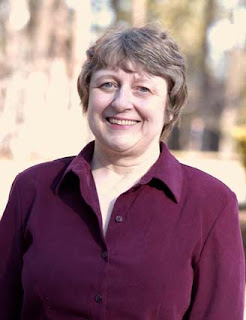 Williams says when she heard Mabry's idea, she immediately thought of a recent recommendation by the American Association of Pediatrics that pediatricians should screen all children 3-years-old and younger for symptoms of autism and should refer them for treatment when appropriate. Yet many pediatricians don't have the specialized training or experience necessary to carry out that screening process, Williams says.
"The variance within the spectrum, breadth of severity levels, extensive types of data, and numerous potential causes, as well as overlapping factors and diagnosis, all contribute to an immensely complex problem," Mabry says. "It is all but impossible to manually sift through expansive data to reach meaningful conclusions, which is why we believe automated software holds the most promise."
The project involves three distinctive software systems, which are in various stages of development. The first project Mabry and her computer science students began working on last summer, supported by summer research student fellowships from Whitworth, involved developing a screening tool to identify the possibility of autism in children and to suggest further evaluation if warranted. Using the computer protocol, pediatricians can gather information about symptoms that are related to ASD. Weights are assigned to each symptom and the software analyzes the data to determine if a child appears to be developing normally or should be evaluated further for ASD. Mabry and the students expect to wrap up the project this summer, and they hope to apply for grants to have the weighting system further refined by specialists and then field tested by pediatricians.
The second project involves developing a tracking and analytical tool that would trace patients' treatments and progress to identify correlations between the two, thereby identifying which treatments might be most effective. A team of computer science students led by Alice Clawson, '09, began the project this past spring. Clawson presented the team’s work at the Northwestern Association for Behavioral Analysis Regional Conference, held at Gonzaga University in March. Mabry and one of her students are developing it further this summer through a Whitworth student research fellowship.
The third, planned project is an ambitious ASD agent mining system that will adapt Mabry's previous intelligent medical agent system to analyze large data banks, with the goal of identifying common causal factors and trends of ASD. Mabry and Williams have recently joined the Interactive Autism Network Research Community and have received approval to tap into their large data bank, hosted by the Kennedy Krieger Institute at Johns Hopkins University, and are positioning to pursue national and private funding for this project.
Williams, as well as Dana Stevens, an instructor in education at Whitworth, are serving as consultants to Mabry and her students, and they're connecting other ASD experts in the Spokane community to the project as well.
Located in Spokane, Wash., Whitworth is a private liberal arts university affiliated with the Presbyterian Church (USA). The university, which has an enrollment of 2,600 students, offers 53 undergraduate and graduate degree programs.
Contacts:
Susan Mabry, associate professor of mathematics & computer science, Whitworth University (509) 777-4686 or smabry@whitworth.edu.
Betty Fry Williams, Edward B. Lindaman Chair and professor of education, Whitworth University, (509) 777-4688 or bwilliams@whitworth.edu.
Emily Proffitt, public information officer, Whitworth University, (509) 777-4703 or eproffitt@whitworth.edu.

To advance the study and treatment of this growing epidemic, Susan Mabry, Whitworth associate professor of mathematics & computer science, and Betty Fry Williams, Lindaman Chair and professor and coordinator of special education at Whitworth University, have teamed up to create a highly-specialized analytical software application that will screen for ASD, help doctors make referral decisions, and track patients' progress.
"It is our contention that automated software promises viable methods for analyzing varied dimensions, treatments and causes of ASD," Mabry says. "We are confident that a close affiliation between autism experts and computer scientists is the only avenue that will produce answers for this devastating disease. Through this research, we hope to make meaningful contributions to the growing body of autism findings and advanced computer science methodologies."
Mabry and Williams envision that the system will be accessible online so parents and professionals can add their own assessment data and autism patients' progress can be documented over time.
"We're hoping this will help us verify the treatments that create the best outcomes for children with ASD and will perhaps further identify which symptoms respond best to certain treatments," Williams says.
ASD is a serious and complex neurological disorder that impedes a person's ability to communicate and relate socially to others, Williams says. Symptoms include impaired communication, reduced social interaction, and preoccupation with limited items or topics. More than 500 treatment options exist, ranging from special diets to swimming with dolphins, which create difficult decisions for parents of children with autism, she says.
Mabry and Williams decided to conduct the research after Mabry, who has a background in medical informatics, attended the Lindaman Chair lecture Williams gave at Whitworth last year about research on the causes of ASD. Mabry's previous research project, which was funded by the National Science Foundation, was an intelligent agent clinical decision support system that targeted critical care and trauma environments. After hearing Williams talk about the complexities involved in autism detection and treatment, Mabry wondered whether she could adapt and expand her previous project to address the problems associated with screening and treating autism.
 Williams says when she heard Mabry's idea, she immediately thought of a recent recommendation by the American Association of Pediatrics that pediatricians should screen all children 3-years-old and younger for symptoms of autism and should refer them for treatment when appropriate. Yet many pediatricians don't have the specialized training or experience necessary to carry out that screening process, Williams says.
"The variance within the spectrum, breadth of severity levels, extensive types of data, and numerous potential causes, as well as overlapping factors and diagnosis, all contribute to an immensely complex problem," Mabry says. "It is all but impossible to manually sift through expansive data to reach meaningful conclusions, which is why we believe automated software holds the most promise."
The project involves three distinctive software systems, which are in various stages of development. The first project Mabry and her computer science students began working on last summer, supported by summer research student fellowships from Whitworth, involved developing a screening tool to identify the possibility of autism in children and to suggest further evaluation if warranted. Using the computer protocol, pediatricians can gather information about symptoms that are related to ASD. Weights are assigned to each symptom and the software analyzes the data to determine if a child appears to be developing normally or should be evaluated further for ASD. Mabry and the students expect to wrap up the project this summer, and they hope to apply for grants to have the weighting system further refined by specialists and then field tested by pediatricians.
The second project involves developing a tracking and analytical tool that would trace patients' treatments and progress to identify correlations between the two, thereby identifying which treatments might be most effective. A team of computer science students led by Alice Clawson, '09, began the project this past spring. Clawson presented the team’s work at the Northwestern Association for Behavioral Analysis Regional Conference, held at Gonzaga University in March. Mabry and one of her students are developing it further this summer through a Whitworth student research fellowship.
The third, planned project is an ambitious ASD agent mining system that will adapt Mabry's previous intelligent medical agent system to analyze large data banks, with the goal of identifying common causal factors and trends of ASD. Mabry and Williams have recently joined the Interactive Autism Network Research Community and have received approval to tap into their large data bank, hosted by the Kennedy Krieger Institute at Johns Hopkins University, and are positioning to pursue national and private funding for this project.
Williams, as well as Dana Stevens, an instructor in education at Whitworth, are serving as consultants to Mabry and her students, and they're connecting other ASD experts in the Spokane community to the project as well.
Located in Spokane, Wash., Whitworth is a private liberal arts university affiliated with the Presbyterian Church (USA). The university, which has an enrollment of 2,600 students, offers 53 undergraduate and graduate degree programs.
Contacts:
Susan Mabry, associate professor of mathematics & computer science, Whitworth University (509) 777-4686 or smabry@whitworth.edu.
Betty Fry Williams, Edward B. Lindaman Chair and professor of education, Whitworth University, (509) 777-4688 or bwilliams@whitworth.edu.
Emily Proffitt, public information officer, Whitworth University, (509) 777-4703 or eproffitt@whitworth.edu.
Subscribe to:
Posts (Atom)


